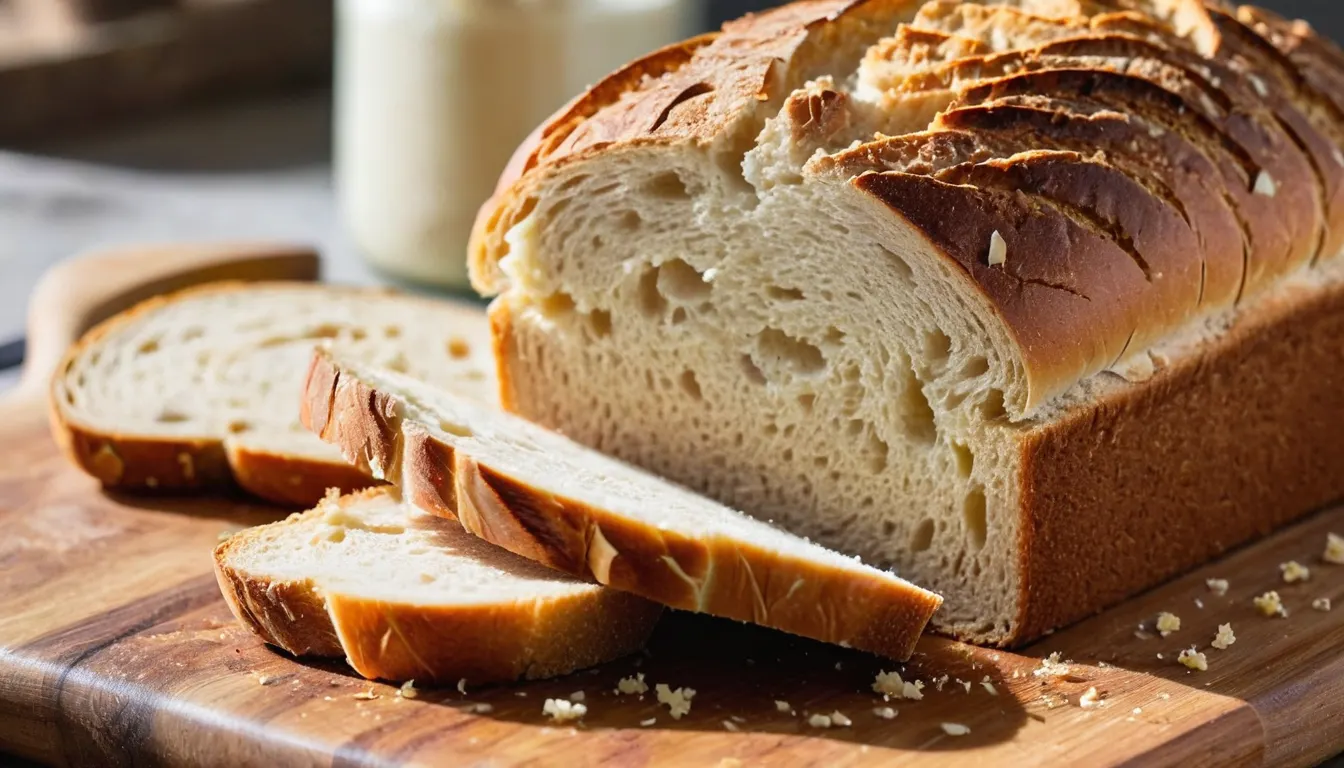
Recipe card
- Makes
- 1 loaf, about 900 g baked
- Hydration
- 75% (about 77% overall)
- Levain
- 20%
- Salt
- 2%
- Hands-on
- 45 minutes
- Start to finish
- 18 to 26 hours
- Bake
- 250°C / 480°F, then 230°C / 450°F
Ingredients
| Ingredient | Weight | Baker's % |
|---|---|---|
| Bread flour | 450 g | 90% |
| Whole wheat flour | 50 g | 10% |
| Water, about 30°C / 86°F | 375 g | 75% |
| Levain (100% hydration) | 100 g | 20% |
| Salt | 10 g | 2% |
| Total dough | 985 g | 197% |
Levain build: 20 g ripe starter, 50 g bread flour, 50 g water. This makes 120 g, enough for the dough plus a little left in the jar.
Timeline
| Time | Step | Duration |
|---|---|---|
| Day 1, 8:00 | Build levain | 4 to 6 hours |
| 12:00 | Mix flour and water (autolyse) | 30 to 60 minutes |
| 13:00 | Add levain, then salt | 15 minutes |
| 13:30 to 15:00 | Four sets of stretch and folds | Every 30 minutes |
| to about 18:00 | Bulk fermentation continues | 4 to 6 hours in total |
| 18:00 | Pre-shape, rest, shape | 45 minutes |
| 19:00 | Cold retard in the fridge | 8 to 16 hours |
| Day 2, 8:00 | Preheat, score and bake | about 1 hour 45 minutes |
Times assume dough around 24 to 26°C (75 to 78°F). See the schedule planner for other routines.
Method
- Build the levain. Mix 20 g starter with 50 g flour and 50 g water. Leave at about 24°C (75°F) until doubled and domed, 4 to 6 hours.
- Autolyse. In a large bowl mix both flours with 350 g of the water until no dry flour remains. Cover and rest 30 to 60 minutes. Hold back the other 25 g.
- Add levain. Spread 100 g levain over the dough and pinch and fold it in with a wet hand for 2 to 3 minutes.
- Add salt. Sprinkle the salt over, add the reserved 25 g water, and squeeze and fold until the salt dissolves and the dough comes back together.
- Stretch and fold. Every 30 minutes for the first 2 hours, wet your hand, lift one side of the dough, fold it over and turn the bowl. Four folds make one set.
- Finish bulk. Leave covered until the dough has grown 50 to 75%, has a domed, slightly jiggly surface and shows bubbles on the sides and top. Judge by these signs more than by the clock.
- Pre-shape. Tip onto an unfloured bench and use a scraper to form a loose round. Rest uncovered 20 to 30 minutes.
- Shape. Flour the top, flip, and shape into a tight boule or batard. Place seam side up in a floured banneton. See shaping and scoring.
- Cold retard. Cover and refrigerate at 3 to 5°C (37 to 41°F) for 8 to 16 hours.
- Preheat. Put the Dutch oven in the oven and heat to 250°C (480°F) for 45 to 60 minutes.
- Score and bake. Turn the cold dough onto baking paper, score it, and lower it into the pot. Bake covered for 20 minutes. Remove the lid, reduce to 230°C (450°F) and bake 20 to 25 minutes more, until deep brown.
- Cool. The loaf is done at an internal 96 to 99°C (205 to 210°F). Cool on a rack for at least 1 to 2 hours before slicing; the crumb is still setting.
Use thick oven gloves for the pot and lid, and lower the dough on baking paper rather than by hand. A preheated cast-iron pot causes serious burns.
Variations
- Easier dough: drop water to 70% (350 g). Good for first loaves or weaker flour.
- Seeds: add 10 to 15% toasted seeds after the second fold.
- Milder flavour: use a younger levain and a shorter cold retard.